
Early in my career at Deseret Book Company, I was introduced to a culture deeply shaped by the book, The Oz Principle. The ideas were so powerful that I’ve continued to lean on them for the last 3+ years on the Wyze team. I've found that as I discuss challenges with my team, these principles of accountability come up again and again. So, I thought it would be valuable to walk through them in this post—both as a refresher for others and to help cement them in my own mind.
Table of Contents

- Stop Waiting for the Wizard
- The Line Between Success and Failure
- The Victim Cycle: How We Get Stuck
- The 4 Steps to Accountability: Your Path Forward
- Does It Actually Work?
- A Few Things to Keep in Mind
- The Bottom Line: Why Accountability Wins
Stop Waiting for the Wizard
Ever feel like you're just waiting for someone else to fix a problem? A new boss, a new policy, some magical solution from on high? In their classic book, The Oz Principle, the authors use the story of The Wizard of Oz to make a powerful point: just like Dorothy and her friends, we often think we need an all-powerful wizard to grant us what we lack—courage, a heart, a brain, or a way home.
The big reveal, of course, is that they had the power to get what they wanted all along. 2 The journey down the yellow brick road is what helped them realize it. 3 This is the core of the Oz Principle: stop waiting for wizards and start recognizing the power you have to get the results you want by taking accountability. 4 It’s not just another management fad; it’s a fundamental shift in mindset that can transform you and your organization.
The Line Between Success and Failure
The book’s most powerful tool is a simple idea: imagine a thin line that separates all our actions and attitudes at work.
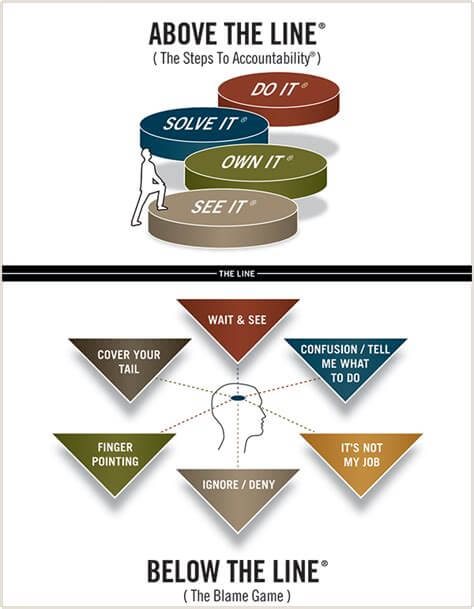
Below the Line is where you'll find excuse-making, finger-pointing, confusion, and a general feeling of helplessness. 8 People operating here are stuck in a "victim cycle," focusing on why things went wrong instead of on fixing them. 8 Their energy goes into preparing stories and defending their turf.
Above the Line is the zone of accountability. This is where you find ownership, commitment, and a relentless focus on finding solutions. People here take personal responsibility for results and are powered by the question, "What else can I do to get the outcome we need?"
The goal isn't to be perfect. Everyone dips Below the Line sometimes to vent or feel frustrated. The key skill is to recognize it quickly and consciously climb back Above the Line.
| Dimension | Below The Line (The Victim Cycle) | Above The Line (The Accountability Path) |
|---|---|---|
| Mindset | Helpless, powerless, confused, focused on the past. 8 | Ownership, empowered, committed, focused on the future. 6 |
| Behaviors | Ignore, blame, wait for instructions, cover your tail. 6 | See it, own it, solve it, do it. 14 |
| Language | "It's not my job." "They're to blame." "No one told me." 10 | "What else can I do?" "I'll take responsibility." "Let's find a solution." 6 |
| Outcome | Stagnation, poor morale, missed goals. 2 | Innovation, high morale, and real results. 2 |
3 The Victim Cycle: How We Get Stuck
Operating Below the Line isn't just a bad mood; it's a predictable downward spiral. The book identifies six stages that pull people and teams deeper into inaction 6:
- Ignore/Deny: Pretending a problem doesn't exist.
- It's Not My Job: Defining your role so narrowly the problem is someone else's.
- Finger-Pointing: Actively blaming other people or departments.
- Confusion/Tell Me What to Do: Waiting for explicit instructions to avoid thinking for yourself.
- Cover Your Tail: Focusing on documenting your innocence rather than solving the problem.
- Wait and See: Complete paralysis, hoping the problem just goes away.
Recognizing these stages in yourself or your team is the first step to breaking the cycle and moving Above the Line.
4 The 4 Steps to Accountability: Your Path Forward
So, how do you climb Above the Line? The Oz Principle lays out a clear, four-step path, with each step represented by one of Dorothy's friends 14:
- Step 1: See It (The Lion's Courage)
First, you need the courage to see reality as it is, without sugarcoating or denial. 16 This means honestly acknowledging problems and being open to feedback, even when it’s tough to hear. 15 You can't solve a problem you refuse to see. - Step 2: Own It (The Tin Woodman's Heart)
Next, you need the heart to take personal responsibility for your role in the situation. 16 This isn't about taking the blame; it's about owning your contribution to the results and committing to being part of the solution. 9 - Step 3: Solve It (The Scarecrow's Wisdom)
With ownership comes the power to find solutions. This step requires the wisdom to constantly ask, "What else can I do?" 6 It’s about staying engaged, thinking creatively, and refusing to give up when you hit a roadblock. 10 - Step 4: Do It (Dorothy's Determination)
Finally, you need the determination to follow through and execute your plan. 16 This is where ideas become action. It means taking full responsibility for making things happen and achieving the results you set out to get.
5 Does It Actually Work?
The principles sound good, but do they deliver? The framework has been applied everywhere, from Fortune 500 companies to high-stakes fields like law enforcement.
Companies that adopt a culture of accountability report dramatic improvements, including higher profit margins, faster customer response times, and fewer quality complaints. 15 One company, facing its worst-ever month, implemented the principles and beat its projections by 20% the very next month.
The model is also used to build trust in policing. An officer who ignores misconduct is operating Below the Line. In contrast, an "Above the Line" culture supports programs like the "duty to intervene," where officers are expected to hold each other accountable—a real-world example of "See It, Own It, Solve It, Do It."
6 A Few Things to Keep in Mind
The Oz Principle is powerful, but it's not without its critics. The most common complaint is about the term "victim mentality," which some find harsh, politically charged, or just plain off-putting. 3 It's a fair point. If you're a leader implementing these ideas, you might consider using more neutral language like an "ownership mindset" versus a "blame mindset" to get the message across without alienating people.
It's also useful to see how this model compares to other leadership styles. For example, Servant Leadership focuses first on the growth and well-being of people, believing results will follow. 20 The Oz Principle, in contrast, focuses first on achieving results through ownership. Neither is right or wrong, but they have different starting points. A leader might choose the Oz Principle to tackle a culture of blame, whereas Servant Leadership might be better for addressing burnout and low morale.
7 The Bottom Line: Why Accountability Wins
In the end, The Oz Principle offers more than just a leadership technique; it presents a competitive advantage. An organization stuck Below the Line is slow, inefficient, and wastes energy on internal politics.
An organization that lives Above the Line, however, is agile, innovative, and resilient. When everyone—from the front lines to the executive suite—takes ownership, problems get solved faster, teams work together better, and goals are actually achieved. The real magic isn't about finding a wizard; it's about discovering the power of accountability that was inside you all along.
Works cited
- app.thestorygraph.com, accessed July 24, 2025
- The Oz Principle Book Summary by Roger Connors, Tom Smith, and Craig Hickman, accessed July 24, 2025
- Reviews - The Oz Principle: Getting Results Through Individual and Organizational Accountability | The StoryGraph, accessed July 24, 2025
- The Oz Principle: Getting Results Through Individual and Organizational Accountability - SciSpace, accessed July 24, 2025
- The Oz Principle - Wikipedia, accessed July 24, 2025
- The Oz Principle: Getting Results Through Individual and Organizational Accountability, accessed July 24, 2025
- The Oz Principle | Summary, Quotes, FAQ, Audio - SoBrief, accessed July 24, 2025
- The Oz Principle - Institutional Research, accessed July 24, 2025
- The Oz Principle: Mastering Accountability for Success | by Angie Bellender | Medium, accessed July 24, 2025
- The Oz Principle: Getting Results Through Individual and Organizational Accountability by Roger Connors | Goodreads, accessed July 24, 2025
- 4 Steps to Creating a Culture of Accountability, accessed July 24, 2025
- Book review: How the 'Oz Principle' can keep you above the line - Police1, accessed July 24, 2025
- The Oz Principle: Unlocking the Path to Accountability and High-Performance Teams - An Interactive Journey - AWS, accessed July 24, 2025
- The Oz Principle - Wikipedia, accessed July 24, 2025
- 5 Takeaways After Reading: The Oz Principle - Paul Harstrom, accessed July 24, 2025
- The Oz Principle Summary of Key Ideas and Review | Roger Connors, Tom Smith, Craig Hickman - Blinkist, accessed July 24, 2025
- The OZ Principle | Actionable Books, accessed July 24, 2025
- The Oz Principle Summary - Roger Connors, Tom Smith, and Craig Hickman, accessed July 24, 2025
- Review by jrobles76 - The Oz Principle: Getting Results Through Individual and Organizational Accountability, accessed July 24, 2025
- What is Servant Leadership? - Robert K. Greenleaf, accessed July 24, 2025
- How Servant Leadership Is Different From Other Leadership Styles, accessed July 24, 2025
- 5 Key Takeaways From The Oz Principle Book - LEAD Diligently, accessed July 24, 2025